
THE GRADUATE PROGRAM IN HISTORY
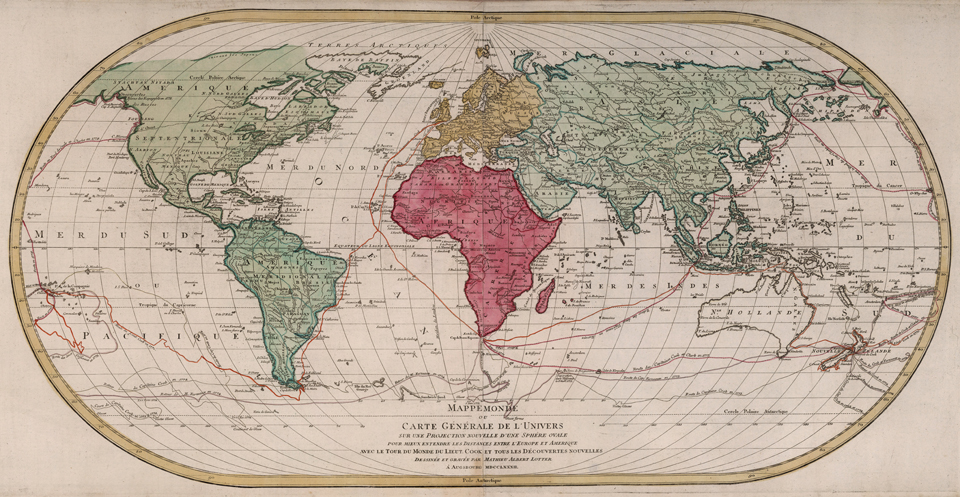
Our graduate program is composed of "themes" and "fields." They are designed to be elastic and permeable: they interconnect and flow into
each other. Students who come to Stony Brook to study history are encouraged to cross
boundaries and create connections.
Students in our doctoral program develop expertise in both thematic areas and geographical fields. Working closely with our award-winning faculty, they engage in interdisciplinary and transnational scholarship. This approach fosters a dynamic and collegial learning environment where students receive substantial mentorship.
THEMES
The modern world-system and previous varieties of global connections comprise an increasingly integrated area of historical analysis that can be studied from different vantage points. The related study of modern capitalism has recently been revived as a way to analyze historical inequalities and class cultures. By following transnational processes, social histories, and historical power formations, this thematic triad helps to frame and also connect various big historical processes: western imperial expansion; pre-existing Asian, American, and African trade and state systems; colonial encounters and cultural representations; the global flow of goods, peoples, and ideas; and the articulation of metropolitan and colonial social formations. Specific research topics may include: Comparative empires; commodity histories; material and capitalist cultures; slavery and labor; hybrid and diasporic identities; subaltern struggles; North-South relations; and environmental facets of globalization.
Nature is within us and all around us. Human habitats—starting with our multi-species bodies—are only partly under human control. Inversely, the environment "out there" is deeply influenced by humans and their technologies. We can find evidence for these trans-human relationships in personal blood samples in addition to global measures of carbon emissions, air temperatures, and sea levels. The history of this multi-level interplay—from the molecular level to the planetary—is a rich area for interdisciplinary scholarship. The nexus of bodies, scientific knowledge, and non-human things is even more interesting because health and habitat are cultural ideas as well as biological realities. Possible research topics include: Cultures of science; technology and technocracy; the political ecology of urbanization; industrial pollution and environmental justice; plants, animals, and pathogens as historical actants; disease in cross-cultural perspective; public health in global perspective; and environmentalism(s) in comparative perspective.
Race, citizenship, and migration intersect at moments of political, economic, and social transformation. In such moments, various identities and forms of belonging—cultural, racial, sexual, ethnic, linguistic, religious, national—become fluid and susceptible to reformulation. Under this framework, such categories can be studied as historical constructions that traverse borders, nations, and legal structures, thereby connecting otherwise disconnected populations. This cluster emphasizes the ways that the state bestows or denies people the privileges of citizenship based on their national or ethnic background or their racialized or gendered status. Possible research topics: Borders and borderlands; diaspora and transnational consciousness; migratory labor and class mobility; regimes of citizenship exclusion (policing, detention, deportation, incarceration, colonialism); social justice movements and civil rights; and politicized ethnic movements.
Cultural identity as expressed by religion, gender, sexuality, and race are powerful shapers of action but are also historical artifacts that change over time. Religion—embodied in texts, rituals, modes of dress and comportment, and architecture—operates to form solidarities across borders and connect people across vast expanses of space, as well as to create divisions and exclusions. Gender, as both an object of inquiry and a category of analysis, identifies the personal in the political and examines the relationship between bodies, society, and the cultural contexts that mediate between them. These fields intersect with the history of ideas, politics, sexuality, and subjectivity. Possible research topics include: Textual, material, visual, and sonic cultures; identity politics and discourses of rights; affect and emotion; daily life and the family; and cultural conflicts and reconciliations.
The nation-state may be today's dominant form of political organization and imagined community, but historians see it as a relatively recent phenomenon. Taking state-building and nationality as contested historical and cultural processes, this thematic triad draws attention to earlier forms of political structures and affiliations—local communities, dynastic states, empires, and so on—in addition to the emergence of modern states and their distinctive forms of power and public culture. This theme brings into focus the politics of contention within nation-making, as well as alternatives to the modern nation, by seeing the state through the lenses of pre-modern and post-modern social solidarities and/or non-modern communities and their political lives. Specific research topics may include: War and society; law and sovereignty; democratic and social revolutions; public and counter-public spheres; popular politics and civil society; post-colonialism and nation-building; and non-state and stateless spaces.
For more information on our areas of expertise, please see our faculty directory, which includes affiliated faculty from other departments. Students can take advantage of various interdisciplinary and community-building programs on campus, including the Humanities Institute, the Latin American and Caribbean Studies Center, the Initiative in the Historical Social Sciences, and the Graduate Student Organization. Stony Brook is also a member of the NYC-area Inter-University Doctoral Consortium and all PhD students may take courses for credit at participating institutions, including Columbia, the CUNY Graduate Center, New York University, and the New School.
FIELDS
History and Africana Studies work closely together to support doctoral students interested in pursuing primary fields or subfields in African history. We also offer opportunities for comparative and interdisciplinary study of themes (see below). In addition to close faculty mentorship, students can gain skills as teaching assistants in the yearly lecture courses we offer on African history, including Environmental History of Africa, History of the African Diaspora, Health and Disease in African History, and Human Rights in Africa.
Stony Brook offers an innovative, interdisciplinary Ph.D. program in Atlantic History. This relatively new field focuses on the myriad transformations experienced by regions surrounding the Atlantic Ocean—especially Africa, Europe, and the Americas—as they came into prolonged contact during the early modern period. Atlantic historians study the social, cultural, economic, geopolitical, and environmental impacts of these interactions during periods of encounter, conquest, colonization, revolution, and early nation-building. Students may also study with faculty in Latin American history, Africana Studies, and Hispanic Languages & Literatures. Graduate students are encouraged to participate in programs at Stony Brook's Latin American & Caribbean Studies Center and Humanities Institute. Additional classes and seminars (including NYU's Atlantic History Seminar and Columbia’s Seminar in Early American History) are available at area universities through a consortium program.
East Asian History provides valuable training for individuals interested in pursuing careers in academia, international business, journalism, government, and NGOs. Stony Brook offers a Ph.D and M.A. specialization in East Asian History. We adopt innovative and transnational approaches to the study of Chinese and Japanese history to understand East Asia’s role in the global order.
Besides department course offerings, students are encouraged to participate in East Asian courses and seminars in the metropolitan New York area and network with other graduate students and scholars through the China and Japan Columbia seminars and other SUNY schools. Ph.D. applicants are expected to have basic proficiency in the Chinese or Japanese language and pursue further language training at Stony Brook.
Few history departments contain such a number and variety of scholars—specialists of different regions, time periods, and methodologies—who study and teach environmental history, broadly defined. Our core faculty comprises Jennifer Anderson (historical ecology, commodities studies, environmental humanities, Atlantic World); Alix Cooper (early modern European histories of science and medicine); Paul Kelton (indigenous studies, disease and medicine, early America); Donna Rilling (urbanization, comparative industrialization, household production, Early Republic); Tamara Fernando (Indian Ocean world, Persian/Arabian Gulf, Sri Lanka, histories of science, environment, and labour); Valeria Mantilla Morales (Latin America and the Caribbean; Colombia; cultural history; colonialism; race; Food; Environment; cartography); and Chris Sellers (occupational health and hazard, trans-border industry and pollution, comparative suburbs, U.S. environmentalism). Ph.D. students in our program also benefit from the expertise of resident scholars with allied interests: Shobana Shankar (health and disease in Africa, international/global health) and Nancy Tomes (U.S. histories of health and medicine). Enterprising students can also find colleagues and mentors in Stony Brook University’s highly ranked School of Marine and Atmospheric Sciences and its excellent Department of Ecology and Evolution. Stony Brook's Geospatial Center likewise has openings for graduate student collaboration.
Stony Brook faculty cover a range of periods and topics in European history, with particular strengths in medieval and early modern religion and culture, the Atlantic World, the eighteenth century, empire and decolonization, and modern state formation. Our department includes senior scholarsdepartments and programs, mid-career scholars, and younger colleagues. We practice a range of different methodologies & such subjects as Eurasian relations and comparative fascism, as well as with faculty in other departments and programs, notably European Languages, Literatures and Cultures.
Latin American history is a thriving regional concentration at Stony Brook, long recognized as one of the top Ph.D. training centers in the field. Since 2000, twenty-five students have defended dissertations on Latin American topics, and many of these doctorates have gone on to hold important teaching and research posts across the Americas. Our students win a notable share of international fellowships like SSRC-IDRF and Fulbright grants. Students also collaborate with cross-disciplinary Latin Americanists in fields such as Sociology and Hispanic Languages & Literature via the Latin American & Caribbean Studies Center (LACS), which is housed in the History Department. Stony Brook doctoral students engage with peers from Columbia, NYU, and other New York universities through a class consortium program, monthly seminars of the New York City Workshop on Latin American History, and an annual conference.
Our growing program in South Asian history is designed to develop well-rounded scholars of the modern and early modern subcontinent. Students develop expertise in South Asian history, but move beyond the narrow regional field to cultivate fluency in global and thematic areas of inquiry to situate their research in broader disciplinary discussions (environment and capitalism, religious networks, transnational urbanism, borderlands). Students are also encouraged to work with scholars of other fields and disciplines with expertise on key topics in South Asian history such as colonial and postcolonial dynamics, Persianate societies, and Indian Ocean connections. Collaborations with Stony Brook’s Mattoo Center for India Studies offer graduate students unique opportunities. Our South Asian History doctoral students engage with faculty and peers from Columbia, NYU, and other area universities, taking classes through the NYC-area Inter-University Doctoral Consortium.
Transnational history is a vibrant field of study at Stony Brook, encompassing most of our faculty. This field emphasizes connections across geopolitical, ecological, social, and economic borders. For the modern period, transnationalism allows historians to explore the rise of the modern nation-state system, a range of post-colonial legacies, and the subsequent effects of non-state movements. Transnational frameworks are also useful for illuminating the early modern period, when webs of circulation and interdependence brought together the worlds of the Pacific and Indian oceans as well as the Atlantic.
Our Americanists cover a spectrum of periods (sixteenth to late twentieth centuries) and approaches (including social, cultural, and political history). We have collective strengths in Atlantic world, environment and health, gender and sexuality, and race and citizenship.
Our graduates have a strong track record finding employment at four-year colleges, universities, and in the public sector. Throughout their time at Stony Brook, they receive substantial advising and may participate in professional development workshops to prepare them for future endeavors--including making conference presentations, publishing, grant writing, preparing job search materials, and interviewing. Our program also emphasizes the development of strong teaching skills and offers extensive teaching opportunities, starting with teaching assistantships and moving on to stand-alone courses in summer and winter terms.
GRADUATE Frequently ASKED QUESTIONS
PhD applications must be submitted and all supplemental materials received by January 15 for Fall admission.
MA applications m ust be submitted and all supplemental materials received by March 15 for Fall admission.
Your application must be submitted online through the Graduate School.
Please click the help link on the login page. If you require further assistance, contact the Graduate School at GradAdmissions@stonybrook.edu. The History Department does not have access to the application system. We recommend that you apply in sufficient time to avoid any last-minute technical difficulties.
—Statement of Purpose should be uploaded with your application.
—Writing sample should be uploaded with your application.
—Letters of recommendation: When you submit your application, your recommenders will automatically be sent a link to submit their letters electronically to the Graduate School.—An Official transcript should be sent directly from the Registrar's Office of your school(s) to the History Department. Photocopies are not acceptable. We will need the transcript, in English, with the degree posted for every school you attended. If your school does not offer transcripts in English, we will need an official (notarized) translation. Some overseas documents must be evaluated by World Educational Services.
—TOEFL or IELTS examination score. The Graduate School requires that students contact Educational Testing Services (ETS) and have them send official score reports directly to Stony Brook University. Our institution code is 2548. See Graduate School for language test requirements.
— Optional GRE scores. The Graduate School requires that students wishing to submit their GRE scores contact Educational Testing Services (ETS) and have them send official score reports directly to Stony Brook University. Our institution code is 2548.
Your Statement of Purpose (3-4 pages) should describe the intended field(s) of study, the insights or experiences motivating the decision to specialize in this area, and the kinds of questions which the applicant hopes to explore; this statement should be as specific as possible about intended research topics and subject area(s) and indicate relevant faculty with whom they envision working. Applicants are encouraged to contact these professors before submitting the application.
An appropriate writing sample would be an undergraduate seminar paper or an excerpt from a BA or MA thesis. It should demonstrate the student's capacity for research, analysis, creative thought, and excellent writing. A paper based on original research (using primary sources) with a strong historical argument is preferable. The writing sample should be approximately 12-20 pages, with proper citations and bibliography. If absolutely necessary, the sample can be up to 25 pages long, including footnotes, endnotes, and/or bibliography, but please do not exceed 25 pages.
The requirement still applies, meaning you must translate your paper(s) into English.
You may re-visit the application portal to see whether or not all supporting materials have been received.
If your native or primary language is not English, you must take either the TOEFL or the IELTS. No waivers are available for this requirement. "Native or primary speakers of English" are defined as those who have been raised or educated in an English-speaking environment. "Native or primary speakers" may speak a language other than English at home but speak English exclusively outside the home in social and/or educational contexts. Intentional misrepresentation of ones' native/primary language is academic dishonesty, and grounds for dismissal from the University. See Graduate School for minimum required scores on the TOEFL or IELTS.
All doctoral (PhD) students who are not native/primary speakers of English must also take a speak test upon arrival at the University. Depending on the result of this test, some students may be required to take ESL classes.
We need to have the results in our office no later than January 15. If your score is not received on time, it could jeopardize your admission to the program.
No applicants to our graduate programs have to take the GRE, since it is now optional. However, if you wish to be considered for the Graduate Council Fellowship, please be aware that it does still currently require GRE scores. To be eligible for this fellowship, one must be a US citizen or permanent resident of the US; successful GCF nominees typically have extremely high test scores, extremely strong GPAS, significant research experience, excellent letters, and a good fit to the strengths of the program. We usually only have 1 or 2 applicants each year who meet all these criteria.
If your application is incomplete, the History Department will not review your file. It is therefore crucial that all required supporting documents are received by the deadline.
Admissions decisions are based primarily upon assessment of the student's academic records, potential for scholarly achievement, and the ability of our faculty to support the student's intended field of study.
We send out admissions decision letters in March. Please refrain from calling for status updates. If you have not heard from us by April 15, please contact us.
Follow this link for the Graduate School Application Checklist