
Seed Grants Awarded 2025
Universal Scaling Behavior Originated from Fermi Surface Geometry and Topology in Quantum Altermagnetic Metals
 |
 |
| Han Ma SBU, Physics and Astronomy |
Qiang Li BNL, Condensed Matter Physics and Material Science Division |
Abstract:
This project aims to establish the mechanisms and universal transport laws of altermagnet that exhibit spin-polarized transport despite zero net magnetization to advance energy-efficient spintronics. Such universal scaling in metals is governed primarily by Fermi-surface geometry and topology rather than microscopic detail, and we leverage this perspective to classify behaviors across diverse materials.
On the theory side, we show how altermagnetism can emerge from a Fermi liquid via a d-wave Pomeranchuk instability that drives spin-resolved quadrupolar distortions without producing net magnetization. A central objective is to promote this instability by engineering Fermi-surface anisotropy through lattice potential, strain, or pressure to create hotspots, inflection points, and proximity to van Hove singularities. We treat generic interactions using a functional renormalization-group framework that tracks their flow, yielding realistic routes to stabilize altermagnetism and concrete predictions for dynamical susceptibilities and real-space spin textures.
A second objective quantifies the competition between altermagnetism and superconductivity by extending the functional RG to finite temperature, identifying regimes where the altermagnetic metal is favored, estimating the critical temperature that suppresses BCS pairing, and characterizing potential unconventional superconductivity on non-circular Fermi surfaces.
Moreover, Ab initio calculations will supply electronic-structure inputs and connect theory with experimental measurement. To close the loop with experiment, we will deliver testable predictions for elastic and inelastic neutron scattering, topological Hall and anisotropic magnetoresistance measurements, and spin-polarized STM, applied to canonical and proposed altermagnets (MnTe, CuMnAs, EuAuSb) with particular focus on RuO2, expected to display low-temperature (~150 K) Fermi-liquid behavior.
Overall, this 18-month program will define universality classes, distill key design principles, and speed the discovery of altermagnets for scalable, low-dissipation spintronics.
A Phased-Array Bistatic Radar Network for Measuring Atmospheric Winds
 |
 |
|
Pavlos Kollias |
Benjamin Saliwanchik BNL, Instrumentation Division |
Abstract:
Bistatic radar systems differ from monostatic configurations in that the transmitter and receiver are located at separate positions. This flexible geometry offers significant advantages in both security and atmospheric sensing applications. By measuring signal strength (scattering) and phase (Doppler) from different angles, bistatic systems provide richer, more comprehensive insights into weather phenomena.
The Radar Science Group at Stony Brook University (SBU) has developed a bistatic radar receiver designed to operate in conjunction with the SBU SKYLER-2 mobile X-band phased array radar (PAR). The 2025 Seed Grant funding will support both the evaluation and data analysis of this prototype passive radar node.
The technical validation of the system—particularly its time and phase synchronization performance—will be led by the team at Brookhaven National Laboratory (BNL).
In addition, the funding will support the collection of bistatic radar observations under two distinct atmospheric conditions: i) Clear-air environments and ii) severe weather conditions. These observations have the potential to yield breakthrough insights into horizontal and vertical wind estimation in both cloud-free and cloudy conditions.
Finally, initial hardware and software testing will be used by the BNL team for the design and development of a more sophisticated, versatile, and accurate time/phase synchronization system. This next-generation synchronization capability will be integrated with a newly acquired metamaterials-based antenna radar system, further enhancing the scientific capabilities of the SBU radar science group.
The funding will maintain the SBU radar science group at the forefront of technological advantages in atmospheric remote sensing and the proposed atmospheric experiments can lead to significant advantages in the measurements of winds. In addition, the funding will allow the Instrumentation Department (IO) at BNL to demonstrate cost-efficient methods for synchronizing arrays over km length scales, and this is expected to support IO's efforts towards establishing expertise in the techniques of high-precision timing measurements.
AI-FUSE: AI-enabled Fusion of Uneven Spatio-temporal Evidence
 |
 |
| Hendrik Hamann SBU, SOMAS |
Katia Lamar BNL, Environmental Science and Tech |
Abstract:
Building on the latest advancements of Artificial Intelligence, particularly Foundation Models, this project will develop a new technique to construct uniform 4D data cubes from field measurements. AI-FUSE (AI-enabled Fusion of Uneven Spatio-temporal Evidence) will address a very common challenge hampering (geo)science, which is that different sensors have distinct advantages and limitations with some sensors collecting data at high spatial resolutions while others have high temporal resolution. The resulting data gaps and misalignment in the time stamp of the measurements leave gaps in our understanding of the geosciences and limit our ability to use AI for deeper analysis. AI-FUSE will advance existing approach by (i) filling in missing data in space, (ii) converting one sensing modality into another, and (iii) harmonizing data across asynchronous timestamps.
To demonstrate its scientific value, AI-FUSE is envisioned to be applied to air temperature measurements collected by a multi-sensor network in the Encanto neighborhood of Phoenix during the U.S. Department of Energy’s Southwest Urban Integrated Field Laboratory (SWIFL) field experiment. The 4D air temperature cube derived by AI-FUSE is expected to reveal new insights into land surface–atmosphere interactions in cities during extreme heat events. A particular focus will be on quantifying the localized cooling benefits of urban parks. These insights will support more effective planning and investment in infrastructure, while also informing energy demand management in one of the hottest urban regions in the U.S.
2513 Mendez-Mendez and Yu
 |
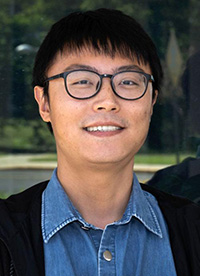 |
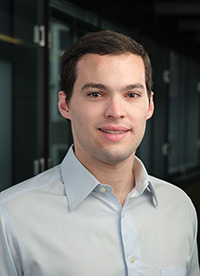
| Jorge Mendez SBU, Electrical and Computer Engin |
Xi Yu BNL, Computing and Data Center |
Abstract:
The project "Continual Learning of Agentic AI for Scientific Applications" aims to transform how artificial intelligence (AI) supports scientific discovery by developing adaptive, self-improving AI agents. Current AI systems for science are largely static: they rely on fixed tools and workflows that cannot evolve as new data or challenges emerge. This limitation hinders their ability to generalize to complex and changing scientific tasks.
This seed project will design an AI agent that learns from its own experiences—much
like a junior scientist refining their skills over time. The research will integrate
specialized and general-purpose computational tools within a modular framework, enabling
the agent to select, combine, and update methods dynamically. Key innovations include
(1) self-evaluation mechanisms that allow the agent to assess its own performance
without ground-truth labels, (2) advanced in-context learning strategies that refine
decision-making by drawing on prior successes and failures, and (3) continual learning
techniques that allow individual tools to improve with limited data.
The team will demonstrate these advances through applications such as segmenting cell
organelles in electron microscopy images, a challenging task requiring coordination
of diverse models and methods. By creating agents that continually adapt and improve,
this project lays the foundation for AI systems that act as long-term collaborators
in scientific research.
Over its 18-month duration, the project will produce proof-of-concept results to position
the investigators for larger-scale federal funding. Ultimately, this research aims
to establish a new generation of self-improving AI agents capable of accelerating
discovery across scientific domains.
2514 Ringer and Szafron
|
|
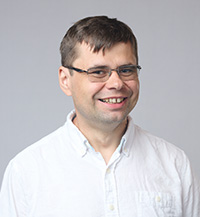 |
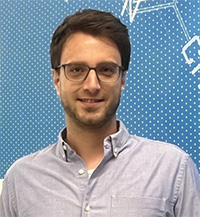
| Felix Ringer SBU, Physics and Astronomy |
Robert Szafron BNL, Physics Department |
Abstract:
The Electron-Ion Collider (EIC), currently under construction at Brookhaven National Laboratory, will be the flagship U.S.-based collider facility, delivering unprecedented high-statistics datasets. In addition to its research program in nuclear physics, the EIC’s high luminosity, beam polarization, and precision make it a compelling discovery machine for physics beyond the Standard Model. In particular, it can probe a unique parameter space of light, weakly coupled particles motivated by various dark matter models. Such scenarios may be inaccessible to searches at other collider facilities, such as the Large Hadron Collider (LHC) at CERN, making the EIC an important bridge between nuclear and high-energy physics. Conventional search strategies, which rely on specific model hypotheses and predefined observables, are generally not optimized to identify anomalous events when signals are weak or exhibit exotic signatures. These limitations motivate the development of artificial intelligence (AI)-driven methods that exploit full event-by-event information to unlock the EIC’s discovery potential. Within this research program, we will develop modern AI techniques for model-independent searches, establish benchmark datasets, and provide tools to guide future theoretical and experimental developments.
High-Density 2.5D Integrated Point-of-Load Converters for Extreme Environments Abstrct
 |
 |
| Fang Luo SBU, Electrical and Computer Engin |
Soumyajit Mandal |
Abstract:
This project will conduct a systematic study of power conversion circuit design and packaging for extreme environments, especially under cryogenic temperatures and high radiation environments. The proposed power converters will address fundamental issues in Microelectronics for extreme environments to target multiple applications in Quantum Computing, Nuclear and High Energy Physics, Artificial Intelligence Science, and Accelerator Science. Accordingly, the team will investigate and compare different power conversion topologies, packaging materials, and structures, and demonstrate the integration of these technologies in high-density cryo-cooled and radiation-hardened power-of-load (POL) converters. Two exemplary applications will be pursued during the project period. The first addresses the demand for high step-down (48-1V) high-current power conversion in AI/quantum computing applications. To address this need, the team proposes 2.5D integrated multi-phase cryo-cooled POL gallium nitride (GaN) converters with embedded magnetic substrates that down-convert from 48 V to 1 V at load levels up to 100 A with power efficiency > 95%. Such cryo-POL converters operate at cryogenic temperature and can be co-located with quantum computing chips and/or superconducting CPUs, thus significantly reducing power transmission losses and heat loss due to cables and feedthroughs. The second application addresses the demand for improved monitoring and quench detection of superconducting magnets, which are a critical enabler for nuclear and high energy physics using particle accelerators [Marchevsky2021]. To address this need, the team proposes in-magnet quench detection electronics powered by isolated low-power (~100 mW) GaN POL converters that can operate down to 4K. Common challenges for both applications include cryogenic POL packaging, power architecture/topology development for cryogenic power conversion, and integration. The team will also study radiation-hardening methods for the design and packaging to ensure that the proposed Cryo-POL power converters can operate safely in the high-radiation environments associated with particle accelerators.
Van-der-Waals ThermoTiles: Tunable 2-D Thermoelectrics for On-Chip Hot-Spot Cooling and Heat Harvesting in Advanced CMOS
 |
 |
| Xu Du SBU, Physics and Astronomy |
Mohamed Boukhicha BNL, Instrumentation Division |
Abstract:
Ever-denser CMOS logic and 3-D chip stacks routinely generate sub-millimeter hot spots that rise >30 C in microseconds. Conventional airflow or even rack-level liquid loops can remove average power, but they cannot quench the sub-millisecond heat spikes that throttle AI tensor cores. We propose to create Van-der-Waals ThermoTiles: atomically thin, electrostatic-tunable thermoelectric (TE) laminates that sit directly beneath logic layers, actively pump heat out during computing bursts (Peltier mode) and ideally scavenge residual heat during idle (generator mode). Our proposed work is based on the hypothesis that thermoelectric 2-D topological-insulator materials (Bi₂Se₃/Sb₂Te₃), stacked into hexagonal Boron Nitride (hBN) and Fermi-level-matched with electrostatic gating, can attain a room-temperature figure of merit ZT ≥ 1. Coupled with ultralow (<10⁻⁷ Ω cm²) Cr/Au contacts, such materials will deliver a coefficient-of-performance (COP) >2 for hot-spot shaving and to harvest tens of µW mm⁻² during idle mode, enough to power on-die sensors autonomously. The proposed research activities include: 1) Thickness-dependent benchmarking of h-BN / Bi₂Se₃ / h-BN heterostructures; 2) electrostatic carrier tuning to exceed ZT > 1; 3) developing gate-tunable p-n micro-Peltier leg for hotspot cooling. By combining topological-insulator physics with robust device engineering, this work will position our labs at the forefront of materials-driven thermal management and open new avenues for energy-efficient, high-power microelectronics. Such development will allow future funding applications to various federal grants.
2540 Djuric and Minkoff
 |
 |
| Petar Djuric SBU, Electrical and Computer Engin |
Susan Minkoff BNL, Applied Mathematics |
Abstract:
The goal of this seed proposal is to establish a unified probabilistic framework for autonomous systems (robots) that must perceive and act reliably in uncertain, dynamic environments. The work addresses two tightly linked challenges. First, we will integrate vision, tactile, and language-based inputs and estimate uncertainty in each modality. This will enable the system to identify when information is unreliable. Second, we will develop models that use these uncertainty estimates to guide action selection, both to accomplish tasks and to acquire better information through active perception. This approach will allow the robot to reduce ambiguity through interaction rather than accept flawed inputs passively. We will develop probabilistic methods to fuse information across vision, tactile sensing, and natural language in settings with sparse, occluded, or inconsistent observations. Such fusion is difficult when inputs arrive asynchronously, contain noise, or lack completeness, conditions common in real-world robotics. We will also develop algorithms for task-level control and motion planning that adapt to uncertainty in perception and dynamics so that downstream actions incorporate confidence estimates to avoid failure. Many motion-planning methods assume a known state and deterministic observations, though recent work accounts for uncertainty. Our approach will operate in a belief-space framework that integrates posterior distributions and will enable the robot to select actions that maximize task-relevant information gain, reduce uncertainty, and preserve safety margins. Contributing personnel: Fernando Llorente, BNL.